shivam@portfolio:~$ cat README.md
shivam@portfolio:~$ cat facts.yml
# At a glance
- role :
- Solo — design, build and operate
- when :
- Sept 2026 – Present
- context :
- Personal project
- stack :
- React · Node.js · Web Crypto · OCI · Caddy · PostgreSQL
- live instance:
- vault-shivam.duckdns.org
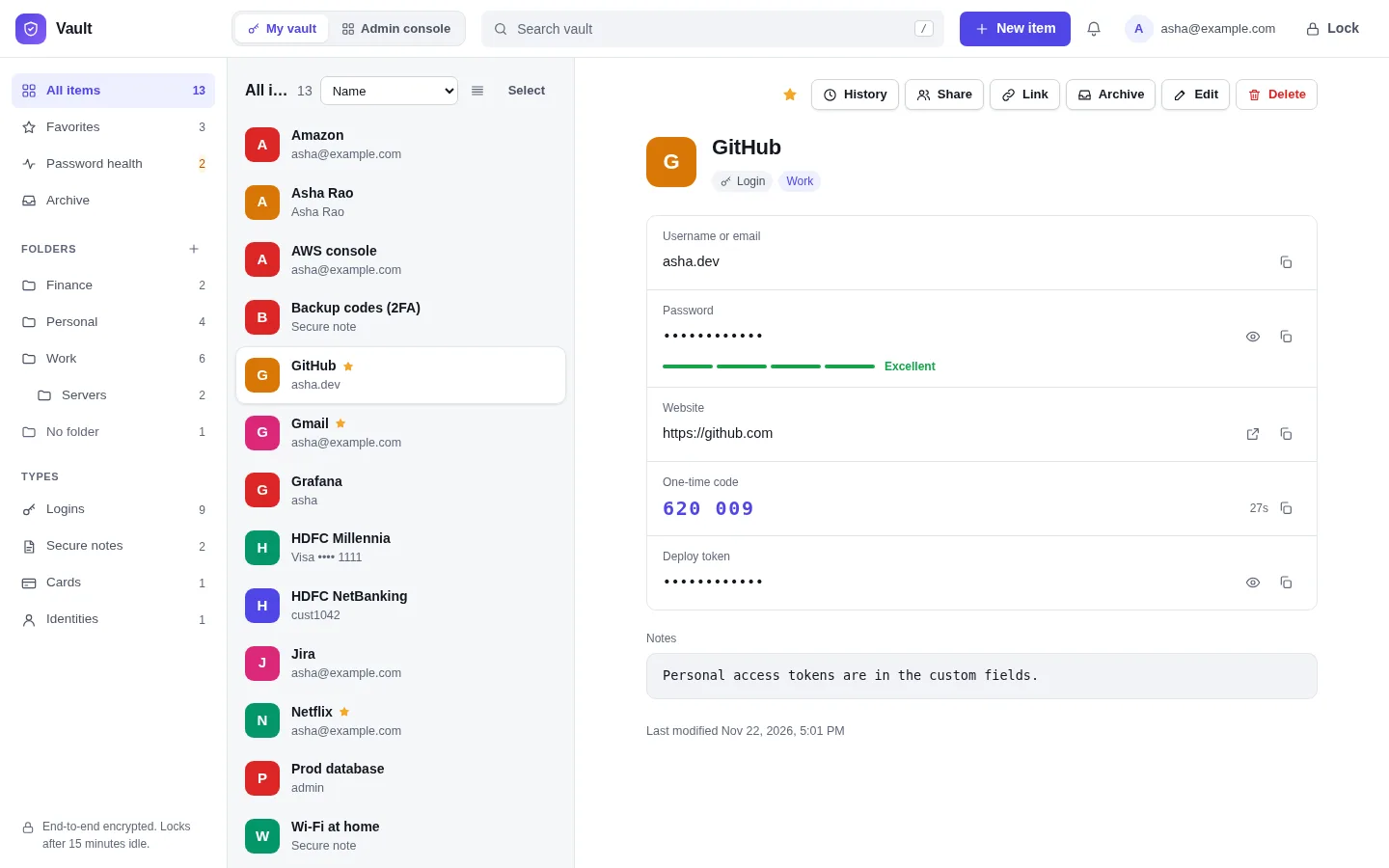
- AES-256-GCM in the browser; the master password is never sent — the server gets a separate HKDF branch, stored only as an scrypt verifier
- Names, websites, notes, folders and tags are encrypted too, so a database dump doesn't even reveal which sites you use
- Organizations, groups and collections, each with its own key, sealed to members confirmed by fingerprint
- Pull-based releases: the host verifies a SHA-256 manifest, health-checks the new build and rolls back on failure; SSH stays closed
- 350 unit and 20 browser tests in CI; encrypted backups restore onto SQLite or PostgreSQL
shivam@portfolio:~$ cat the-story.md
# The story
What it is
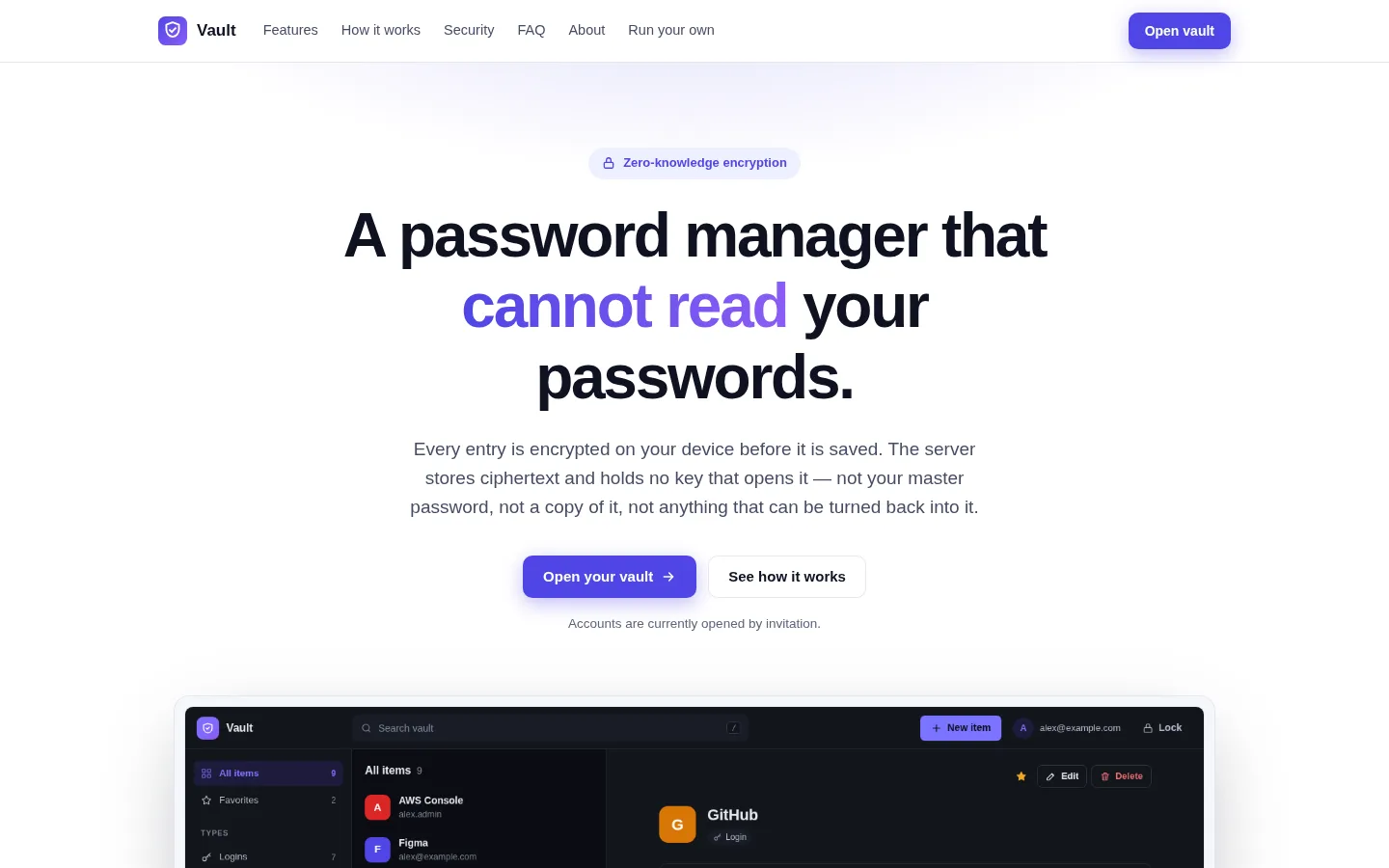
Vault is a zero-knowledge password manager. The master password never leaves the browser; keys are derived there, every field is encrypted there, and the server only ever sees ciphertext. A complete compromise of the server should yield nothing more.
What it does
- Fifteen item types — logins, notes, cards, identities, bank accounts, passports, SSH keys, API credentials, Wi-Fi and more — with custom fields, folders four levels deep and live one-time codes.
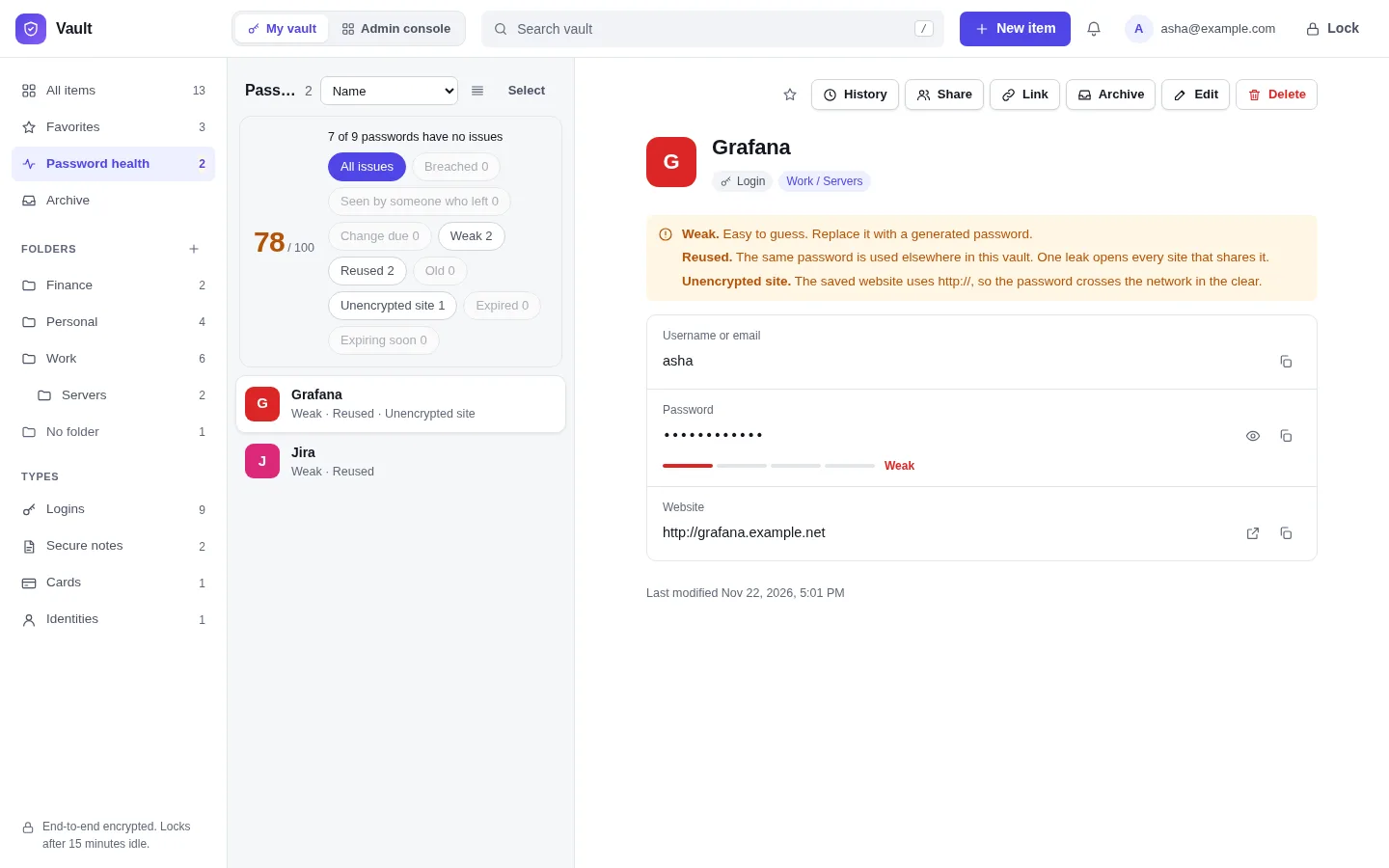
- Password health — weak, reused, year-old and
http://-only passwords, scored out of 100 with advice on each item, computed in the browser. - History you can restore — every edit keeps the previous version, encrypted like the item.
- Import from nine formats — Chrome, Firefox, Safari, Bitwarden, 1Password, LastPass, KeePass, Zoho Vault and more, previewed before anything is saved.
- A browser extension for Chrome and Firefox that fills only where the site truly matches, so a look-alike page gets nothing.
Built for teams too
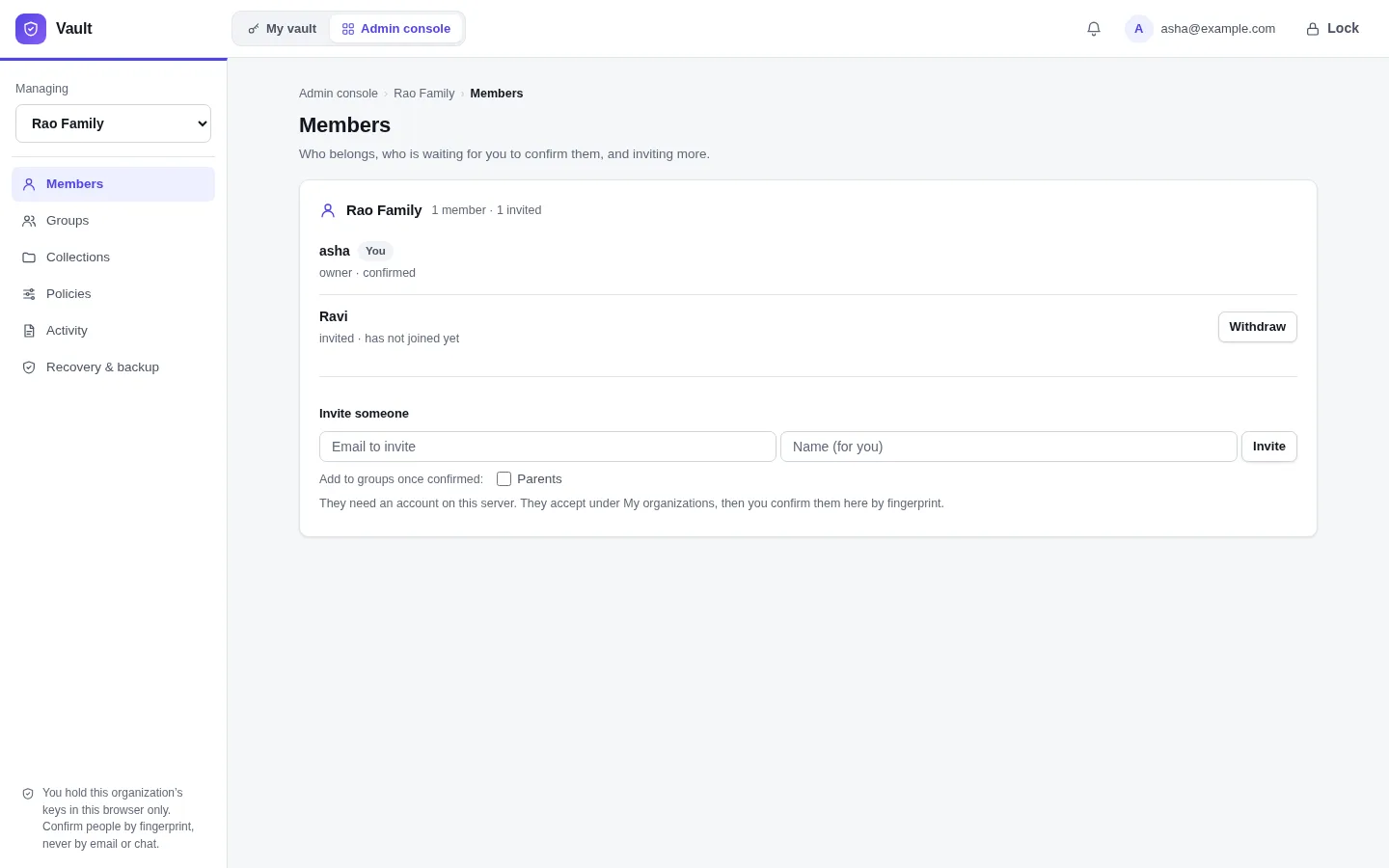
Organizations, groups and collections, each with its own key, sealed to every member you confirm by fingerprint. Permissions, policies, an audit log, key rotation and emergency access — plus an admin console and a built-in service desk for access requests and support tickets. None of it can read a vault.
Runs on your own server
One command on a Linux machine with Docker asks for the address, generates the secrets, starts Vault and prints the link that creates the owner account. Two editions from one codebase: Personal (one account, SQLite) and Business (people, groups and policies, PostgreSQL).
shivam@portfolio:~$ ls -la
shivam@portfolio:~$ ls -la
# Other projects
total 3
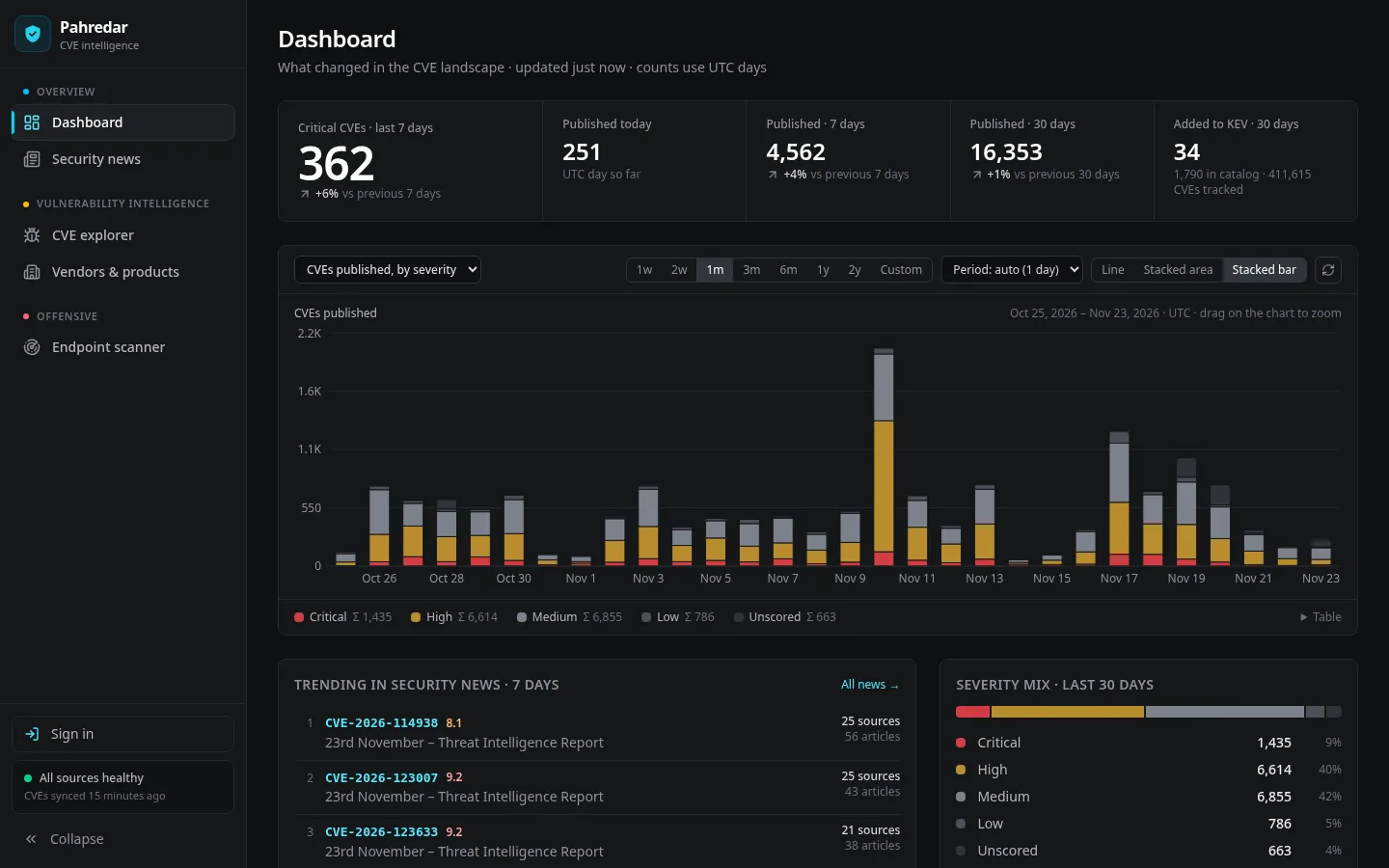 Pahredar — self-hosted security intelligence/A self-hosted CVE intelligence platform: a local copy of every published CVE, enriched with exploitation, exploit and detection data from free public sources, kept current hourly, plus a security news feed and an endpoint scanner.[ view project → ] +15 XP
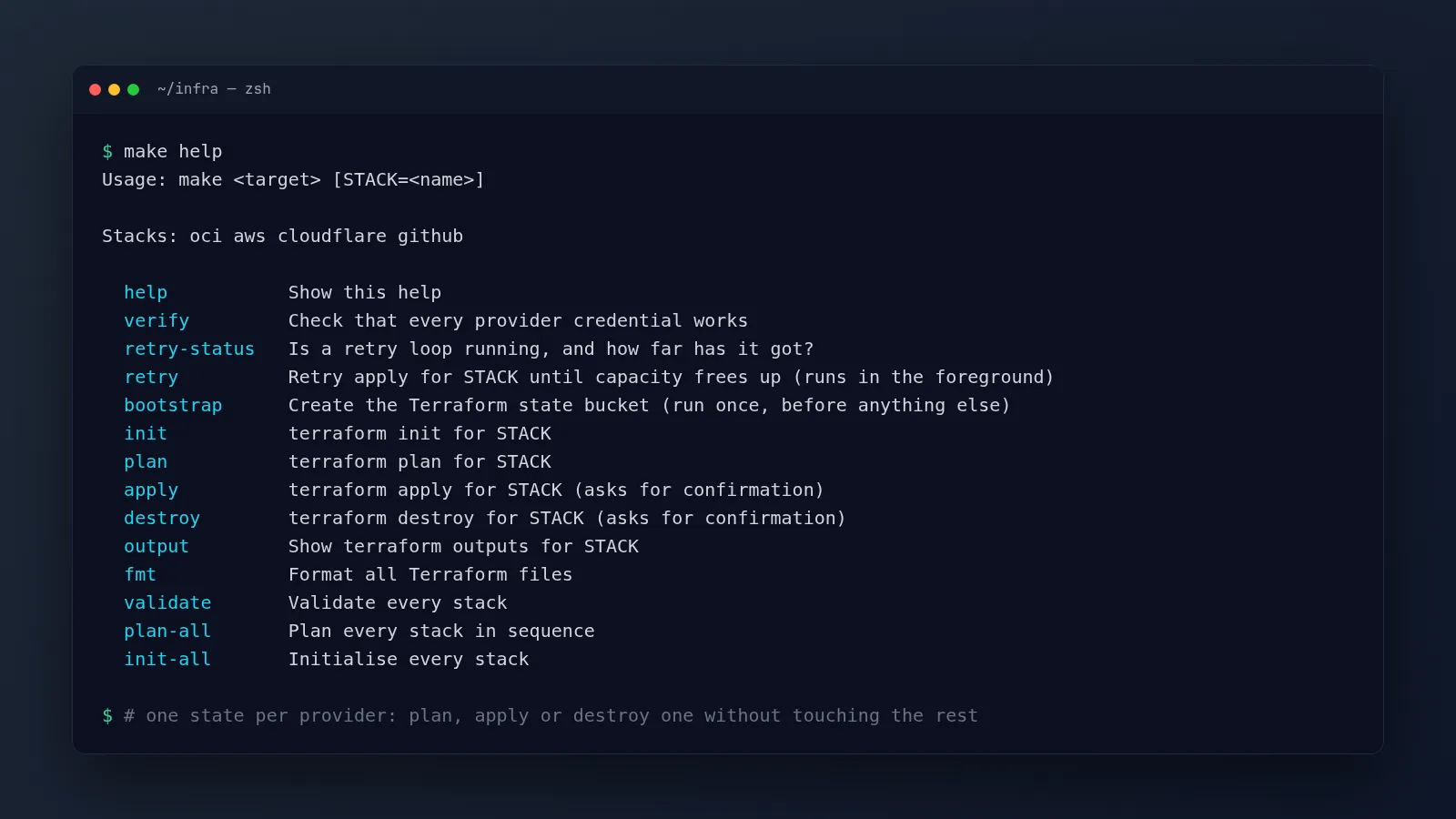 Multi-cloud Infrastructure as Code/Terraform monorepo with isolated state per provider, a single Makefile entry point and remote state in OCI Object Storage.[ view project → ] +15 XP
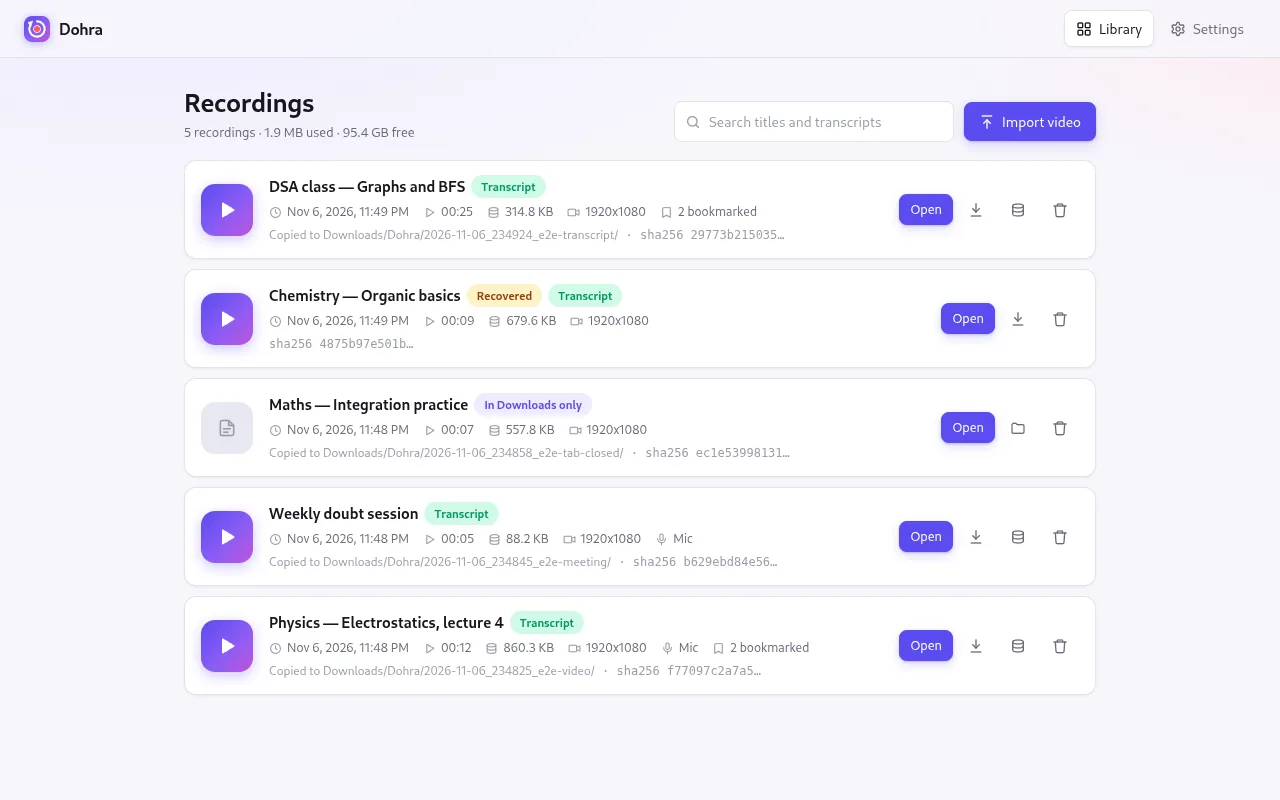 Dohra — local class recorder/Open-source Chromium extension that records a class playing in a browser tab and transcribes it on your own computer — no bot joins the meeting and nothing is uploaded.[ view project → ] +15 XP